As a dog parent, used to walking your dog in the park or any other public place, you are naturally expected to ensure the safety of others as well as your canines. Further, It is also the owner’s responsibility to ensure that their pet does not create a nuisance or cause damage to public property.
In case the pooch is large or aggressive, owners are expected to attach them to a leash in order to maintain control. However, in one such instance of ignoring this rule, a New York woman had to face dire consequences. The woman was taken into custody after a confrontation with park police, on the charge of walking her unleashed pooches.
Marchand was booked when she was caught walking her pooches, Comet and Sophie unleashed, in Riverside Park last week. According to the sources, the 29-year-old was walking in Manhattan’s Riverside Park with her two unleashed Australian shepherds. Dora was warned by a park enforcement officer.
Recalling the incident, Dora told the New York Post that she was initially approached by a cop, who warned her about breaking the rules. Dora added that she apologized and the cop was ready to release her with a sanctioned warning. However, immediately the first cop was joined by his partner, who interrogated her about her name, address, and date of birth, in order to issue a ticket.
Things took a worse turn when Dora was not able to recall her new home address and had forgotten her ID and phone at home. After preliminary interrogation, the cop told Dora that she would have to accompany them to the station to check the outstanding warrants. The 29-year-old said she was denied permission to go to her apartment to regain her ID.
Later more officers reached the spot with electric poles and cages. However, Dora was able to make a phone call to her boyfriend, who came with her ID and leashes. However, despite this Dora was take to the station, where she was ordered to pay a $525 fine.
A spokesman for the Parks Department said Dora “refused to comply with the signage on the site and the rules stated by the two”.
Therefore, taking a lesson from this incident it is best to comply with the arrangement of walking your dogs on leash and thereby ensure a harmonious functioning of all.
The majority of dogs, like people, experience anxiety from time to time. It’s a common emotional reaction. Some dogs, on the other hand, are more stressed than others. Dog anxiety affects all breeds, yet it differs from one dog to the next.
The good news is that you have a variety of options for assisting your puppy through difficult times. It’s also in their best interests to assist them in managing their Anxiety before it increases or becomes a chronic illness.
Dogs, like people, suffer from Anxiety. It is a natural and healthy emotion, despite the fact that it is unpleasant. Dog anxiety affects all breeds, yet it differs from one dog to the next. Every dog suffers from this from time to time, but if not addressed on time, the dog might develop an anxiety disorder. And, this anxiety, if left untreated, can develop into behavioral and other problems.
What Causes Anxiety in Dogs?
Big life events, such as moving to a new house, having a new kid, or getting a new companion, may all affect a dog’s feelings.
Anxiety might appear to emerge out of nowhere, In general, any significant change in your dog’s regular routine might cause sadness or anxiety symptoms.
Big life events, such as moving to a new house, having a new kid, or getting a new companion, may all affect a dog’s feelings.
The following are some of the most prevalent reasons for dog anxiety:
1. Fear
Loud sounds, unfamiliar persons or animals, visual cues like hats or umbrellas, new or strange locations, specific scenarios — like the vet’s office or vehicle journeys — or surfaces like grass or wood floors can trigger fear-related Anxiety. Although not all dogs react to these stimuli but mostly stressed dogs do get affected by these stimuli.
2. Separation
When dogs with separation anxiety are left alone or separated from their family, they are unable to find solace. Unwanted actions, including peeing and defecating in the house, damaging furniture, and furnishings, and barking, are common manifestations of Anxiety.
3. Oldage
Age-related Anxiety is mostly seen in older dogs, which has been linked to CDS (Cognitive Dysfunction Syndrome). Memory, learning, perception, and awareness begin to deteriorate in dogs with CDS, comparable to the early stages of Alzheimer’s disease in humans. Senior dogs are naturally confused and anxious as a result of this.
4. Hormones
Hormones in female dogs after postpartum and testosterone in unneutered males can lead to Anxiety.
5. Forcible Actions
Puppies develop Anxiety when forced into situations they don’t want themselves to be involved in. They also show Anxiety when they are exposed to an outside environment after being deprived of it for 14 weeks.
Are There Different Types of Anxiety in Dogs?
Social Anxiety is over being among diverse people or pets. Lack of socialization and previous rescue could be the result of Social Anxiety.
Multiple variables can induce these distinct forms of Anxiety, and they can even happen at the same time.
Separation anxiety occurs when your dog is apart from you or other usual providers, such as when you move to a new place or change your routine. When people think of anxiousness in their pets, they usually think of this.
Generalized Anxiety Even in well-trained dogs, this might emerge “out of nowhere” with no apparent reason or trigger.
Environmental Anxiety manifests as a dread of leaving the house or visiting a certain site, such as a veterinarian’s office. Loud noises or terrifying events, such as sirens, alarms, crackers, or thunder, can also create environmental Anxiety.
Social Anxiety is over being among diverse people or pets. Lack of socialization and previous rescue could be the result of Social Anxiety.
Is Anxiety Breed Specific?
Certain dog breeds, particularly working dogs, are prone to Anxiety. Some of the breeds are more prone to Anxiety than others:
Labrador Retrievers, German Shepherds, Border Collies, Cavalier King Charles Spaniels, Cocker Spaniels, etc are a few examples.
How Can I Tell If My Dog Is Having Anxiety?
The best method to tell whether your dog is anxious is to watch their body language.
The signs and symptoms of Anxiety vary from dog to dog, depending on the nature and intensity of the Anxiety. Still, the best method to tell whether your dog is anxious is to watch their body language.
1. Barking & Winning
Vocalization is a typical form of self-expression in dogs, although it can become more intense when they are stressed. Fearful or anxious dogs may whine or bark to attract your attention or self-soothe.
2. Body Posture
Dogs usually carry the same amount of weight on all four legs. A healthy dog with no health problems transfers his weight to his back legs or cowers if stressed. When dogs are terrified, they may tuck their tails or become stiff.
3. Panting
When dogs are overheated, enthusiastic, or anxious, they pant. If your dog is panting despite not having exercised, he might be stressed.
4. Yawning, Drooling, and Licking
When dogs are sleepy or bored, they yawn. We all know they all yawn when they are anxious. But anxious yawning is louder and lasts longer than a drowsy yawn. When dogs are frightened, they may drool and lick their paw excessively.
Stress can also manifest itself in the form of refusal to eat or a lack of bowel function.
5. Changes in the Appearance of the Eyes and Ears
Dilated pupils and fast blinking are common in agitated dogs, just as they are in disturbed people. They may open their eyes wide and show more sclera (white) than usual, making them appear startled. The ears, which usually are relaxed or alert, are pinned against the head.
6. Body Mechanism
Nervous dogs, like people, might have a sudden impulse to go to the toilet. Your dog may be establishing territory and reacting to the stress at the same time when it urinates quickly after meeting a new canine companion. Stress can also manifest itself in the form of refusal to eat or a lack of bowel function.
7. Destructive Behavior
A dog that is facing separation anxiety might put a hell storm in your house. Chewing carpets and furniture and running all around with destruction steps are also signs of Anxiety.
8. Restlessness and Shivering
Your dog might roam around the whole house searching for a comfortable spot to chill but won’t find it due to its restlessness. It might suddenly start shivering when encountering an unwanted situation or someone. Shivering in sleep is also seen in anxious dogs.
How Can I Help My Anxious Dog?
Identifying the indications and causes of your dog’s Anxiety and removing them from these circumstances is the greatest method to treat them with Anxiety.
You must be familiar with your dog’s natural temperament in order to distinguish stress symptoms from normal behavior. Then you’ll know whether he’s licking his lips out of Anxiety or because he wants a treat.
Stay Away from the Things That Make Them Uncomfortable.
Identifying the indications and causes of your dog’s Anxiety and removing them from these circumstances is the greatest method to treat them with Anxiety. Never penalize or reprimand your dog for their behavior. Seek help from veterinary behaviorists and qualified behavior trainers who employ positive training methods, and stay away from your dog’s anxiety triggers until it is under control.
Socialize Them as Soon as Possible.
A dog’s essential socialization stage is between the ages of 4 and 16. This is when a dog’s brain is actively learning how to accept and engage with other members of the social group (dogs, people, and other animals) and the surroundings. Regular handling and exposure to different circumstances in a non-threatening way are critical for a puppy’s development into a sociable, confident, and happy adult.
Regular walks, playtimes, and other things you know your dog enjoys will keep them active.
Attention
Increase the amount of time you spend with your dog. But wait until you observe indicators of enjoyment, such as a wagging tail, before rewarding them. Regular walks, playtimes, and other things you know your dog enjoys will keep them active.
Counter-Conditioning and Training
To address dog anxiety, owners can employ a variety of training techniques. Counterconditioning is one of the methods. The goal of counterconditioning is to modify your dog’s response to the anxiety-inducing stimuli, generally by substituting a more desired behavior, like sitting or focusing on the owner, for the nervous or aggressive behavior.
Anti-Anxiety Medications
Your veterinarian may prescribe drugs or natural remedies if your dog develops a major anxiety issue. SSRIs and antidepressants, such as fluoxetine and clomipramine, are sometimes used for dogs with Anxiety. To assist your dog cope with predicted anxiety-producing situations such as thunderstorms, fireworks, or automobile journeys, your veterinarian may prescribe a benzodiazepine in combination with an antidepressant.
Considering Facts of Dog Anxiety
To address Dog Anxiety, owners can employ a variety of training techniques. Counterconditioning is one of the methods.
Poor treatment by humans will almost always result in an uneasy pet.
A dog that is active and exercises daily is a healthy dog.
Natural herbs actually work in case of dog anxiety.
The symptoms of anxiety exerted by a dog are most of the time towards itself.
Giving excess amounts of attention at the wrong time is also unhealthy.
Once your dog has mastered his basic training skills, training him with advanced commands becomes relatively easier. For your everyday life you need to teach your dog the basic commands but if you are planning on enrolling your dog for certain shows and events then advanced dog training commands come in handy.
Let’s take a look at How to teach your dog advanced training.
1. “Lights” command
It may prove to be useful to have your canine trained to understand the command ‘lights’ because we all have those lazy nights where it absolutely kills us to get out of bed to close the lights.
“Lights” is a pretty difficult command and hence classifies as an advanced training command.
First, get your canine to comprehend that it’s perfectly okay at the moment to jump up and touch a spot on the wall.
At that point, stand out enough to be noticed and get your dog’s full attention, and give them the verbal command “lights” while you turn off and on the light.
At long, introduce “touch”, while pointing at the switch while giving the verbal sign “lights” toward the end.
You will most likely need to show your pooch that “lights” is an idea that alludes to the light switches on the walls and an old spot on the wall.
On the off chance that your little buddy isn’t picking up on the light switch in rooms other than where he originally learned the command, you can likely show him separately on each light switch in each room, and he’ll sort it out.
Make certain to give your canine a lot of training with this one, and a major reward when he successfully takes care of the business.
2. Touch
The command ‘touch’ includes requesting that your canine touch its nose to your hand or a specific object.
Like the numerous different cues, this one has various applications as well. For instance, on the off chance that you need to move your canine from one side of your body to the other and he understands the touch command, you should simply hold out your hand or an object at the spot where you need your canine to be, say the order, and bingo! He’s there.
This order is especially helpful if you and your canine intend to contend in dog shows. It is so because the dog is expected to touch a specific spot in order to obtain extra points or at times to even qualify.
To teach your dog the command ‘touch’ follow these steps:
Take a treat and rub it on a spot in your hand so that your hand smells like the treat.
Place your hand at your dog’s nose level at least a foot away from your dog.
As soon as he nears your hand to sniff the scent, say ‘Yes” in an excited tone and give him the treat to show him your appreciation.
3. Find It
Find it is an advanced training command which is difficult to teach for things other than treats or toys. But with dedicated training and a lot of patience, you might be able to make your dog understand the command for things other toys and treats. Though to teach him the command, the best option is to teach it with the help of toys and treats.
In order to pooch this command, have your dog sit in a spot that it is comfortable with.
At that point show it something like his favorite toy or a treat. Have your pooch stay in place, while you proceed to put the treat someplace in the room.
When the treat is placed, give the “find it” command and reward him once he finds the hidden item.
Over the long run, you’ll need to step by step move the treat or toy farther and farther from your canine and ultimately begin setting it in spots that your canine can’t see. Aiding your canine by pointing and the “go” order will help move the training process along.
4. Place
The ‘Place’ command requires your canine to take himself to an assigned area when asked to and to stay until told otherwise. This cue is staggeringly valuable in an assortment of circumstances—especially those including visitors in your home. It’s basically the dog version of telling your kid to go to his room.
All things considered, any time you don’t need your canine to be underfoot, either for your benefit or his well-being, realizing that he will go to his place when instructed will make life simpler for both of you. Strangely, numerous canines get familiar with this command (or its variations) without their dog-parent putting forth a cognizant effort to teach it to them. But don’t be disheartened if your dog has still not picked up on this command, it’s never too late to teach him.
To teach your dog the command ‘place’ follow these steps:
Put your dog on a leash
Take a treat in your hand.
Say the word ‘place’ or ‘ good night’ or ‘bedtime’ (whatever you want to continue saying for the rest of its life) and take it to the designated place.
The moment you reach the designated spot, say ‘Yes’ in an excited tone and treat your dog.
Repeat this with the leash a few times till your dog starts to understand what you want him to do.
Once it seems like your dog is understanding the cue, take the leash off and repeat the command without it. If your dog goes to the designated place then say ‘yes’ in an excited tone to show it your excitement and hand him over the treat. If he does not understand what you asked him to do, then put the leash back on and try it a few more times with the leash on.
When your dog starts to understand the command and starts going to his designated place when asked to all by himself without any assistance from you, then the next step is to instruct him to go to his designated place and once he does, to further instruct him to ‘lie down’ and ‘stay’.
Once he follows your instructions, let him stay in the same position for 15 to 20 seconds and then ‘yes’ after which say ‘okay’ that will be his cue that he has been released from the command and now he can do as he pleases.
After you say ‘okay’ give him a treat as a mark of appreciation for following through.
Repeat this as many times as it takes for your dog to fully understand the entire command and till he learns what you are expecting him to do.
This command is relatively tougher and would take more time than the other commands for your dog to understand and perform. Be patient with your little furry friend and watch him excel in this command as well.
The key to training your dog successfully is consistency and patience, and of course to be your dog’s biggest cheerleader. And you will see your dog excel at every level of training.
Clicker training for dogs is a popular method of training dogs in various action cues and also changing behaviors like how dogs react under different situations and circumstances.
In clicker training, you need to make an association with the sound of click along with the treatment that you offer to your dog.
How Clicker Training Is Easier and More Efficient?
Clicker training for dogs is a form of positive reinforcement training.
In this training, you need to pay the most attention to when you make that sound of a click.
The timing of the click is essential and each and every click must be followed by a reward.
The purpose of the click is to make your dog believe that what they did was the right action and that is what you desire from them. Why does a dog respond to rewards? Let’s find out.
Dogs have a habit of repeating the actions which give them rewards. This is what is known as positive reinforcement training in which you reward your dog when they behave the way you want them to behave.
Start with very basic things, like asking your dog for his paw, if he agrees, you reward them. This will make your dog believe that this particular act will make me earn rewards so he will continue doing the same.
This article is about Clicker training for dogs which is also known as mark and reward training.
In this training, you are supposed to use a tool known as a clicker. It can make positive reinforcement training efficient.
After multiple sessions of training, your dog becomes accustomed to it. In the clicker training, the sound of the click becomes a reinforcer for good behavior.
What Is Clicker Training?
In Clicker training for dogs, we use a tool called a clicker. A clicker is a very small noisemaker that makes an appropriately loud sound of a click.
The tool used is a clicker, a small noisemaker that makes the sound of a click.
A positive approach to train.
Timings of the click are the most essential aspect of this training.
In Clicker training for dogs, we use a tool called a clicker. A clicker is a very small noisemaker that makes an appropriately loud sound of a click.
Animal behavior is in such a sense that they tend to repeat the behaviors which make them earn rewards.
This is a positive approach as in this training, you do not focus on what your dog is doing wrong, but rather on what they are doing right.
Here, you do not pay attention to their mistakes, but you appreciate the good behavior and do not take them for granted.
It is an indirect way to tell your dog what to do instead of what not to do. This approach is incredibly helpful as it can control your dog’s behavior.
The clicker should be pressed at the right time as it will tell your dog exactly what behavior is appreciated.
It eliminates the guesswork and makes sure that your dog understands what is rewarding and what is not. For eg- You can click right at the moment your dog sits while training them to sit.
What Does the Click Signify?
There is nothing magical and extraordinary about the sound of the click except for the purpose mentioned above.
The purpose of the click is to mark a moment.
Nothing magical and extraordinary about the sound of the click.
Don’t press the clicker unnecessarily.
The purpose of the click is to mark a particular moment. It signifies that the moment there was the sound of a click, that particular act was appreciated.
There is nothing magical and extraordinary about the sound of the click except for the purpose mentioned above.
If you are planning to go for clicker training for your dog or if you are already giving this training to your dog, you need to make sure that the only time your dog hears that sound of the click is during the training and never unnecessarily.
The dog needs to understand that this exact sound of the click is different from any other noise and he must understand its significance.
Is the Clicker Essential?
If your dog is more into toys than food, go for toys. Customize the rewards according to your dog because remember, just like humans, every dog is different.
Any other sound like finger-snapping or a whistle would do.
In the case of deaf dogs, a beam of light is a good way.
The sound of the click shall always be accompanied by rewards.
Though the name is clicker training which comes from the tool this training requires, the clicker however is not an essential part of this training. Strange, no?
Yes, though the training gets its name from that tool, the tool is not as essential as you might think.
As explained above, the significance of the clicker is just to make a unique sound.
If you can make that sound by any other means, it is perfectly fine. For example- in the place of a click, you can snap your fingers or maybe use a whistle or simply use the word yes or yay or wow.
In the case of deaf dogs, none of it would work. But it does not mean that deaf dogs can not undergo clicker training.
In the case of deaf dogs, you can use laser light or any gesture that they could see.
No matter whatever sound or way you use to make it unique, it is all useless until it is accompanied by a reward. You need to reward your dog every time you click.
Dogs are foodies, so the best reward is to give them something edible. The reward is supposed to be anything that your dog in particular loves.
If your dog is more into toys than food, go for toys. Customize the rewards according to your dog because remember, just like humans, every dog is different.
The most important thing is timing. Make the sound of the click at the correct moments and the sound must be followed by a reward. Never forget the reward, that is what this training is all about.
How Does the Clicker Training Work?
It makes the training fun and joyous and you, at the end of the day, develop a healthy good relationship with effective communication with your dog.
You might have doubts like, ‘That is what I do all the time when my dog does something good but there is a humongous difference between doing something just for the sake of doing it and including it as a part of the training.
For example- One day you might say wow, the other day you pat them, and the next day you do something else, the human brain can comprehend that but how is your dog supposed to understand that? Dogs don’t speak the same language as humans. There is no consistency in your appreciation and the way you are appreciating them.
Also, for example, if you ask your dog to sit, the dog can sit on the floor in multiple ways, how is your dog supposed to know the perfect way to sit? For this, you need to use the clicker appropriately at the time when your dog is sitting in a perfect position. This way your dog will know that sitting means this position.
Make sure that you give a reward to your dog at the time while he is still sitting. If you give them a reward while they walk back to you, they will think that reward is for coming back to you. It can be a whole lot of confusion.
While training a dog, you need to teach them a million things, like where to poop, how to poop, when to sit, stand, run, walk, and sometimes even some advanced things like jumping through a hoop.
In such cases, teach them in a basic manner but use a clicker as a supplementary tool. The moment they are doing it perfectly, use a clicker. This way the dog will know what the right action was.
People prefer praising but praising can not be consistent and the same every day. Besides, it’s hard to say the exact same word right at the moment. Praising works upon communication and it is not a perfect way when it comes to training.
Communication is something that goes on between you and your dog on a daily basis. So communication won’t make much difference when it comes to training. Clicker training has to be something different than the usual that your dog hears every day, only then it will be significant.
Also, it simplifies the training as you don’t need to remember what you did yesterday. Studies show that clicker-trained dogs love to learn even in later periods of their lives. They love to learn new skills just to earn a click. It makes the whole training process interesting for them. They feel like they are playing a game and enjoy it to the full.
Even for the trainers, clicker training is comparatively easy as dogs are very supportive and eager to learn in this form of training.
It makes the training fun and joyous and you, at the end of the day, develop a healthy good relationship with effective communication with your dog.
Conclusion
You need to train your dog, never take this aspect of being a dog parent lightly. If you don’t train your dogs, you will encounter problems in the future.
Out of a million ways and forms of training that are available for dogs, the clicker has proved itself to be really efficient.
You need to train your dog, never take this aspect of being a dog parent lightly. If you don’t train your dogs, you will encounter problems in the future.
They might bark and bite the guests and they might poop or urinate anywhere in the house. These are only a few problems to mention.
Use whatever form of training you find easy or take professional help if needed but try clicker training once and surely you won’t regret it.
Is dog walking services an essential activity for your dog or just an excuse for you to hang out with your girlfriend?
Like a child, A dog also wants to know the world, and if they are confined to the house for too long, it’s evident that they get ridiculously bored, and boredom leads to destructive behaviour.
Dog owners enjoy numerous health and social benefits by walking their dogs a few times a week or daily.
Benefits include cardiovascular fitness, Low Blood pressure, solid muscles and bones, and decreased stress.
Your dog depends on you to take them out to explore the world’s sights, smells, and sounds.
Remember that your dog can always gain weight and later attract health issues even if they’re active inside the house.
Most dogs need to be walked at least once a day though some actively energetic dogs may require more daily walks.
Researchers worldwide suggest that other people see people who take their dogs for a walk as friendly and approachable and that a walk can make your dog very happy, but sometimes it happens that you may not be able to find time for a dog walk due to your hectic schedule.
And it’s okay..!!!
1. Mahendra Sharma
Mahendra Sharma is one of the best dog walkers in Gurgaon.
Key Features:
Gives the best dog walking services in your city.
Take care of your dog with the utmost affection.
Maintain hygiene level for your dog.
2. Vet4Pet
Vet4Pet is a great dog walking service provider. The Pet walkers are extremely friendly, Polite, and Experienced folks who will care for your dog like their family members.
While your dog is enjoying their play and a walk, You can chill out with your friends with no worries at all.
3. Dev Prakash
Dev Prakash is always dedicated to providing your little friend with the top level of care with every service, including dog grooming, walking, and boarding. This provider has added a bunch of craziness to his services, making it a great alternative to traditional kenneling options. No matter what type of support your dog needs, Dev Prakash is always ready to provide it to them.
He is well-trained and dedicated to giving their customers a safe, stress-free pet walking experience.
Some of the services he provides are as follows –
Pet Boarding and Walking
Grooming
Pet Taxi
Other Services
4. Ankit Dog Trainer
Ankit Dog Trainer is everyone’s favourite dog walker because of its professionalism and openness to its clients.
Key Features:
Gives the best dog walking services in your city.
Take care of your dog with the utmost
5. BSF Dog Trainer
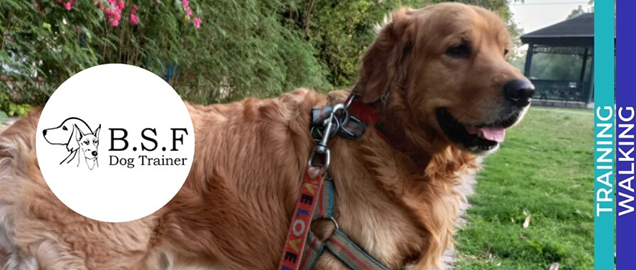
BSF Dog trainer is one of Monkoodog’s best-known dog walkers and trainers. They are listed on Monkoodog’s portal and App, and dog owners from Gurgaon and New Delhi can now book their services at a significantly discounted price.
Key Features:
Take care of your dog with the utmost affection.
Maintain hygiene level for your dog.
Conclusion of Dog Walking Services in Gurgaon
Dog walking is an essential exercise for your dog’s health; always keep your dog under control and carry plastic bags and scoops so that you can clean up if he decides to poop. If you are not very active, owning a dog could give you an excellent reason to walk regularly.
As a dog walker and owner, you must supervise your dog at all times and make sure that your dog is kept within the calling distance. It is always in your best interest to provide your pet with obedience training and social skills necessary to become a well-mannered and socially adjusted dog.
You can prepare for walking your dog by stretching before you start and make sure your equipment, which includes a dog leash and walking shoes, is suitable and will not cause any injury to either of you.
Always protect yourself and your dog from excessive heat and sunburn, and ensure you drink plenty of water before, during, and after your walk.
The Most Straightforward, Successful Dog Walking Services Tips Are
We know
you brought a new buddy home. Yes, it is cute and sweet. But now, day after day
the bathroom breaks and outdoor strolls are hindering your work routine. No
doubt you love your pet intensely, but work is also a crucial part of your
life. For times like these, there are Dog Walkers. These hired individuals can
take your dog for potty breaks and regular strolls. So you can relax and sit
back.
The
fast-paced life and hectic schedules can hinder the quality time and bond
between you and your pet. Moreover, it affects your dog’s daily need to exercise and
bathroom breaks.
For situations like these, there are Affordable Dog Walking Services.
“A Dog Walker should be mindful of any allergic responses the dog may
experience while they are gone.”
What is a Dog Walker?
A dog
walker is someone who charges a fee to walk and exercise your dog when you are
unable to do so. Dogs are typically taken for walks throughout the day while
their owners are at work or gone for a short period of time. Having a Dog
Walking ensures
that your dog is not deprived of outside stimulation.
What are
the qualities to look for in a dog walker?
Patience
– As it has been said time and again, ‘patience is a virtue.’ Dogs
sometimes tend to be stubborn and make the situation complex. For this, a
dog walker should be calm
Knowledge
of the area – A good dog walker should know the area. He should know each
and every park in the locality.
a
Good friend – In the end, it’s your pet who has to be comfortable with the
walker. If your dog isn’t on the right foot with the walker, things will
not be smooth for both of them.
When it
comes to your pet, your dog walking should be meticulous. They should be
mindful of any allergic responses the dog may experience while they are gone.
They should be able to make your pet feel at ease and calm in the presence of
other people and animals.
With our quick
search, excellent service providers on the list, and expert Dog walkers in
Delhi NCR, Monkoodog makes hiring a professional dog walker simple.
Our network of dog walking services is
effective and beneficial in assisting your dog in living a happy and healthy
life.
There are a number of additional advantages to hiring a professional dog
walker.
You can be in touch all the time with the walker and know about your dog’s
response. We’ll love to make you and your pup at ease.